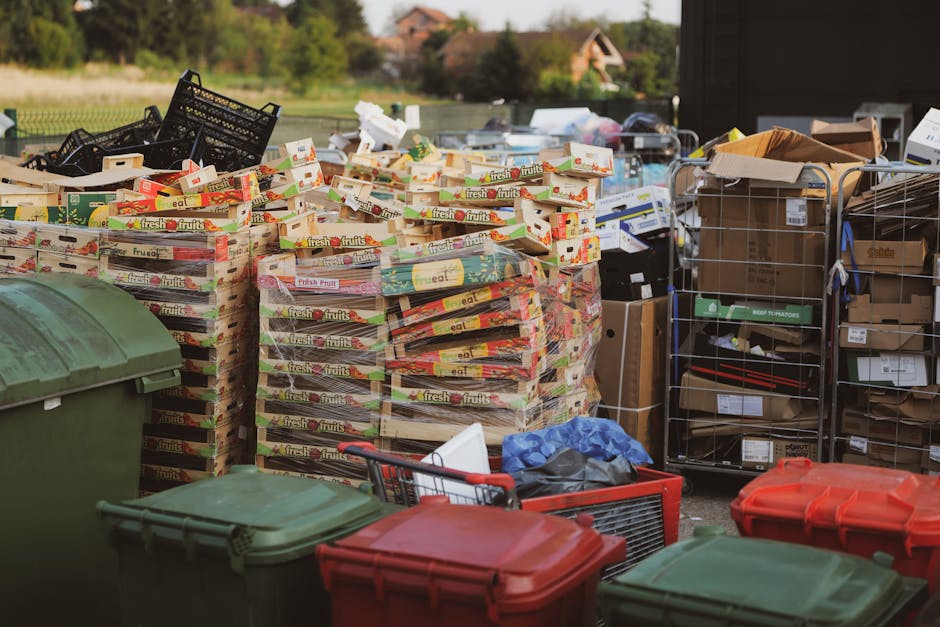
Who handles rubbish in Aldersbrook? Council options

If you have a heap of unwanted furniture by the hallway, a broken appliance in the garden, or a clear-out that has quietly turned into a small mountain, the first question is usually simple: who actually handles rubbish in Aldersbrook? Council options are often the starting point, but they are not always the only route worth considering. In practice, the best answer depends on what you need removed, how quickly you need it gone, and whether the waste is general household rubbish, bulky waste, or something that needs special handling.
This guide breaks everything down in plain English. You will see how council collection options typically work, when they make sense, what they usually do not cover, and where private removal help can be useful if you are short on time or dealing with awkward items. Truth be told, rubbish removal sounds boring until you are staring at a sofa you cannot move on your own. Then it becomes very real, very quickly.
Why Who handles rubbish in Aldersbrook? Council options Matters
Getting rubbish removed is not just about making a room look tidier. It affects safety, hygiene, access, and sometimes even your landlord or neighbours. A bag left outside too long can attract pests. A broken wardrobe in a shared stairwell can make moving around awkward. And for households doing a declutter, the waste often piles up faster than expected. One bag turns into three. A chair turns into a sofa. Then there is a mattress leaning in the corner like it has a mind of its own.
Council options matter because they are usually the first, most affordable route for residents who are planning ahead. They are also the route people often assume will solve every problem, which is where the confusion starts. Council collection systems tend to be practical for everyday waste, but they can be limited by booking rules, item types, collection days, access conditions, and what the service classifies as bulky or special waste.
For Aldersbrook residents, that means a little planning goes a long way. If you know what the council can collect and what it cannot, you can avoid delays, avoid repeated lifting, and avoid the awkward moment where the collection day arrives and half the pile is still not eligible. If you are preparing a move, it is also worth reading this practical decluttering guide and the organisation tips for a smoother house move because rubbish problems tend to show up right when everything else is already busy.
Key point: In Aldersbrook, the best rubbish option is usually the one that matches the type of waste, your timetable, and the amount of effort you can realistically put in without turning it into a weekend ordeal.
How Who handles rubbish in Aldersbrook? Council options Works
The council side of rubbish handling is usually straightforward in principle: household waste is collected through scheduled services, while bulkier or less routine items may need a separate arrangement. In practical terms, most people are dealing with one of three categories.
1. Everyday household waste
This is the normal bin collection route. Food waste, packaging, general household rubbish, and recyclables usually go through the standard household system. It is the most routine option, but it comes with the usual rules about what can go where. If the wrong thing goes in the wrong bin, collection may be delayed or rejected. Not dramatic, just annoying in a very London kind of way.
2. Bulky waste
Bulky items are the big awkward things that do not fit in a wheelie bin or refuse sack. Think sofas, wardrobes, mattresses, tables, broken garden items, or large boxed-up household waste after a clear-out. Council bulky waste services, where available, usually need advance booking and may restrict the number or type of items. Some items may need dismantling or separating before collection.
3. Special or restricted waste
Certain items need more care. Fridges and freezers, electrical goods, paint, chemicals, rubble, gas cylinders, and some renovation waste can fall into this category. Councils often have stricter rules for these items because of environmental and safety concerns. If you are storing a freezer before disposal, for example, it is sensible to follow proper handling and storage steps first; our article on freezer storage when it is not in use may help if you are not ready to get rid of it straight away.
What people sometimes miss is that council collection is not the same as a same-day clearance. It is usually the better fit when you can plan ahead. If you need everything cleared quickly, a private removal service can be the more practical route, especially for mixed loads or awkward access. For moving days, that distinction matters more than you might think.
Key Benefits and Practical Advantages
There is a reason many residents start with the council. When the service fits the job, it can be efficient and relatively simple. Here are the main advantages.
- Lower cost for standard waste: Council routes are often the budget-friendly option for routine rubbish and some bulky items.
- Local familiarity: The process is designed around local household disposal needs, which reduces guesswork.
- Less environmental risk: Proper council disposal generally supports legal, regulated waste handling.
- Good for planned clear-outs: If you are decluttering in advance, council booking is often enough.
- Useful for non-urgent jobs: When the deadline is flexible, council collection can do the trick without needing a full clearance service.
There is also a quieter benefit: decision clarity. Once you know what the council will take, you can sort the rest into keep, donate, recycle, or dispose. That alone can reduce a lot of stress. People often feel stuck because they treat all rubbish as one category. It is not. A bag of mixed waste, an old mattress, and a broken desk are three different problems.
If the item list is mostly furniture, the service choice becomes even more specific. In those situations, it may be worth looking at furniture removals in Aldersbrook or the broader removal services overview if you want everything taken away in one go. That can be especially helpful when the waste is part of a move rather than a standalone clearance.
Who This Is For and When It Makes Sense
Council rubbish options make the most sense for residents who have:
- standard household waste to dispose of regularly
- a small number of bulky items that can be booked in advance
- time to sort items properly before collection
- reasonable access for collection crews
- a desire to keep disposal costs down
They are also a good fit if you are clearing out a room, down-sizing, or getting ready for a move and have already sorted what should be kept. For students, renters, and families in smaller properties, council collection can be a simple way to avoid letting clutter spread. If that sounds like your current situation, you may also find student removals in Aldersbrook useful when the waste clean-up is tied to an end-of-tenancy move or room change.
On the other hand, council options are usually less convenient if you are dealing with:
- many items at once
- heavy furniture down several flights of stairs
- items that need two-person lifting or disassembly
- urgent deadlines
- mixed waste and moving debris combined in one load
A realistic example: if you are leaving a flat near Wanstead Flats and you have a bed frame, some broken boxes, and a couple of bags of leftover household waste, council collection may be fine if you can book early. But if you are facing a same-week key handover and the stairs are narrow, the practical answer might be a faster clearance route. In that case, same-day removals in Aldersbrook can be a better fit for the time-sensitive parts of the job.
Step-by-Step Guidance
Here is a clear way to decide who handles your rubbish and which council option is likely to work best.
- Sort the waste by type. Separate general rubbish, recyclables, furniture, electricals, and anything hazardous or special.
- Check what you actually need removed. A single armchair is very different from a full garage clear-out.
- Decide whether it is routine or bulky. Routine bin waste goes one way; large, awkward, or heavy items may need a special collection.
- Look at your deadline. If you can wait, council collection may be enough. If not, you may need a quicker solution.
- Review access. Can items be carried out easily? Are there stairs, parking issues, or a loading problem?
- Prepare items properly. Empty drawers, remove loose parts, tape sharp edges, and break down flat-pack items where possible.
- Choose the route that fits best. Council collection for scheduled disposal, or a removal team if the job is bigger or more urgent.
- Book and confirm details. Do not leave this to the last minute. That rarely ends well.
If you are planning a move and rubbish is just one part of the chaos, the best approach is often to declutter first and pack second. That sounds obvious, but in real life people usually do the opposite and regret it by day two. A bit of planning helps a lot. Our guide to efficient packing is handy if the waste is coming from a house move rather than a general clean-up.
Expert Tips for Better Results
Over time, a few habits make rubbish disposal much easier.
Keep one "dispose" zone during the move
Instead of scattering unwanted items through the property, make one corner or room the holding area. This keeps things visible and avoids accidentally packing rubbish with the keep pile. It sounds small. It is not small. It saves time every single time.
Separate heavy from fragile waste
Do not bundle everything together just to get it done faster. Heavy items can crush lighter waste, and awkward items can become dangerous when lifted in a rushed way. If you are moving solo, you might also find these tips for lifting heavy objects safely useful before you move anything outside.
Think about access before collection day
Waste can be perfectly sorted and still fail the practical test if nobody can get to it. Narrow hallways, controlled parking, and awkward estate layouts matter. A lot. If you live on or around roads with tighter access, the local route planning articles such as truck routes and parking on Aldersbrook Road and Aldersbrook Estate loading bay access can be helpful context.
Choose the right disposal route for the right item
An old bed, a freezer, and a pile of mixed rubbish should not all be treated the same way. If you have a mattress or bed frame to deal with, it may be worth reading these mattress-moving tips before deciding whether to keep, reuse, or dispose of it. Likewise, if an item is worth storing rather than dumping, secure sofa storage advice can help you avoid throwing away something that still has life in it.
Use the move as a reset, not a scramble
That last-minute rush is where people make strange decisions. They keep things they do not need, dump things they should have sold or donated, and generally make the whole process harder. A calm sort-out a few days earlier is almost always better. Not glamorous, but effective.
Common Mistakes to Avoid
- Assuming every item is council-collectable. Not all rubbish fits the same route.
- Leaving bulky waste until the day before moving. That is how collections get missed and stairwells get cluttered.
- Forgetting to check access. If collection crews cannot reach the item, the collection may not go ahead.
- Mixing special waste with normal waste. Electricals, liquids, and certain household materials often need different handling.
- Trying to lift everything alone. Some items really do need two people or professional handling.
- Booking the wrong service for the volume of waste. If the load is large, a council option may be too limited.
One of the most common errors is underestimating how much waste a move produces. People clear one cupboard and suddenly there are six bags, a broken shelf, and an old lamp they forgot existed. Classic. If you are getting rid of a lot in one go, the wider removal companies overview can help frame whether a household clearance-style approach may suit you better than a basic council pickup.
Tools, Resources and Recommendations
You do not need fancy kit to manage rubbish well, but a few simple tools make the process smoother.
- Heavy-duty bin bags: Useful for bagging general household waste safely.
- Labels or marker pens: Helpful when sorting keep, recycle, donate, and dispose piles.
- Gloves: Good for handling dusty, sharp, or damp items.
- Flat-pack tools: A basic screwdriver or Allen key can help dismantle furniture before collection.
- Measuring tape: Useful for checking whether items can be carried, stored, or removed without damage.
For readers in the middle of a broader house move, the most useful support often comes from related preparation pages. Packing and boxes in Aldersbrook is useful for organising what stays, while storage options in Aldersbrook can be the better answer for items you are not ready to throw away yet. That can save money and stress, which is no bad thing.
If you need to understand the company side of removals and how it works, the services overview and about us pages give useful context. And if you already know you need help, you can always check contact options to discuss the best route for the job.
Law, Compliance, Standards, or Best Practice
Rubbish disposal in the UK is not just a practical matter; it also sits within a broader duty of care. That means waste should be handled and passed on responsibly, not dumped casually or left where it could become a nuisance. The exact council process varies, so it is always wise to follow the local rules for collection, separation, and booking.
From a best-practice point of view, the main ideas are simple:
- present waste only on the agreed day and in the agreed format
- do not leave items where they block access or create a hazard
- separate restricted waste from general rubbish
- use licensed and reputable disposal routes when the job goes beyond standard household collection
- keep records or confirmations when booking a paid pickup or clearance service
For furniture and bulky items, safety matters as much as disposal. Heavy lifting can cause injury, and awkward items can damage walls, floors, or lifts. That is why companies handling removals should also be clear about insurance and safety and, where relevant, health and safety policy. If payment transparency matters to you, the payment and security page is another sensible reference point.
Best practice, in plain English, is this: dispose of waste in a way that is safe, traceable, and realistic for the size of the job. That is the standard worth aiming for.
Options, Methods, or Comparison Table
Here is a simple comparison of the main routes people use in Aldersbrook. It is not about finding a universal winner; it is about matching the job to the route.
| Option | Best for | Pros | Limits |
|---|---|---|---|
| Council standard bin collection | Regular household rubbish | Low effort, routine, familiar | Restricted to normal waste and collection rules |
| Council bulky waste option | Single or limited large items | Usually cost-effective, good for planned disposal | Needs booking, may have item limits and timing constraints |
| Private removal help | Mixed loads, heavy furniture, time-sensitive clearances | Faster, more flexible, can handle awkward access | Typically more expensive than standard council collection |
| Keep/store for later | Items you are unsure about | Buys time, avoids rushing decisions | Needs space and a plan |
If the item is a piano, the comparison shifts sharply toward specialist handling. Pianos are not just "big furniture"; they are heavy, delicate, and awkward in a way that can catch people out fast. That is why self-moving a piano can be risky and why specialist piano removals in Aldersbrook are usually the more sensible option.
Case Study or Real-World Example
Consider a typical end-of-tenancy clear-out in Aldersbrook. A tenant has a sofa that will not fit through the doorway easily, two broken chairs, a pile of moving boxes, and an old freezer that has been unplugged for a while. On paper, it sounds like "just rubbish". In reality, it is four different disposal decisions.
The moving boxes can be flattened and separated for recycling. The chairs might go with bulky waste if the council allows them. The freezer may need a more specific disposal route because electrical appliances are handled differently. And the sofa? That depends on its condition, the access route, and how quickly it needs to leave the flat.
In a situation like this, the smartest move is usually not to force everything into one system. Start with what the council clearly accepts, then decide whether the awkward parts need specialist support. If the lift is tiny, the stairs are narrow, or parking is tight, a private removal team often makes the whole process feel far less like a punishment. Small mercy, really.
That is where local knowledge helps. Routes around Aldersbrook, Forest Gate, and nearby pickup points can affect what is practical on the day. If your clearance overlaps with moving day, the articles on Forest Gate Station pickup spots and drop-off tips near Wanstead Flats can make planning less stressful.
Practical Checklist
- Identify every item that needs removing.
- Separate household rubbish, bulky items, electricals, and anything restricted.
- Decide what can be recycled, reused, stored, or discarded.
- Check whether the council route is suitable for the item and timeframe.
- Measure large items if access looks tight.
- Empty, clean, and dismantle items where possible.
- Use gloves and safe lifting technique.
- Do not leave rubbish in shared areas longer than necessary.
- Book ahead if the item needs council collection.
- Escalate to a private removal option if the job is too big, too heavy, or too urgent.
If you are still undecided, a sensible starting point is to review the type of waste and the deadline first. Everything else follows from that. It sounds almost too simple, but honestly, that is where most good decisions start.
Conclusion
So, who handles rubbish in Aldersbrook? Council options usually cover the everyday and planned side of disposal, especially when you have time to sort items properly. They are a good fit for routine household waste and some bulky collections, but they are not always the best answer for heavy furniture, mixed clear-outs, or urgent removals.
The real trick is matching the waste to the route. If the job is simple and you can plan ahead, the council may be enough. If the waste is large, awkward, or tied to a move, private removal help can save a lot of time and back strain. There is no prize for making it harder than it needs to be.
And if you are mid-clear-out right now, breathe for a second. Sort the pile, choose the route, and take it one step at a time. That is usually how the mess gets smaller.
Get a free quote today and see how much you can save.
Frequently Asked Questions
Who handles rubbish in Aldersbrook if it is just normal household waste?
Normal household waste is usually handled through the local council collection system, using the standard bin or recycling arrangements. The exact rules depend on the type of waste and the collection schedule.
Can the council take bulky items like sofas and mattresses?
Often, yes, but bulky items usually need separate booking and may be subject to limits or conditions. It is better to check the collection format first rather than assuming they will be taken with ordinary bin waste.
What rubbish is not usually suitable for council collection?
Special items such as some electricals, hazardous materials, paint, chemicals, rubble, and certain renovation waste may need different handling. Councils tend to be stricter with anything that creates safety or environmental concerns.
Is council rubbish collection cheaper than private removal?
Usually, council options are more cost-effective for standard or limited waste. Private removal is often more expensive, but it can be worth it when you need speed, flexibility, or help with heavy lifting.
What should I do if my rubbish is too heavy to move alone?
Do not force it. Heavy items can cause injury or damage property. Break the item down if possible, ask for help, or use a removal service that can handle lifting safely.
How far in advance should I book a bulky waste collection?
As early as you can. Council bookings are usually easier to manage when you plan ahead, especially if you are tying the clearance to a move or tenancy end date.
Can I leave rubbish outside my property for collection?
Only if it is allowed by the collection instructions and placed correctly. Leaving items out too early or in the wrong place can lead to missed collection or complaints from neighbours.
What is the best option for rubbish during a house move?
That depends on volume, timing, and item type. Small amounts of normal waste can often go via the council, while bulky furniture, appliances, or mixed loads may be easier to remove through a specialist service.
Do I need to separate recycling from rubbish before a collection?
Yes, where possible. Separating recycling, general waste, and special items makes disposal smoother and reduces the chance of rejected collection or extra handling later.
What if I have rubbish and storage items mixed together?
Sort them first if you can. Items worth keeping can be stored, while rubbish can be removed. If you are unsure about furniture or appliances, storage may be better than rushing to throw them away.
Is same-day rubbish removal available in Aldersbrook?
Sometimes a private removal provider can help quickly if the job is urgent. Council options are usually more structured and may not suit same-day needs.
Who should I contact if I need help deciding between council collection and a removal service?
If you are unsure, speak with a local removals team that understands both moving and disposal needs. They can help you decide whether the waste is better suited to collection, clearance, storage, or a combination of options.
For more support, you can also look through the local service pages and planning guides already mentioned above. The right answer is rarely the fanciest one. Usually, it is just the one that fits your day, your items, and your energy level. And that's enough.